Artist Levil has created an awesome art pack of character portraits for a variety of BREAK!! characters. Check it out here!
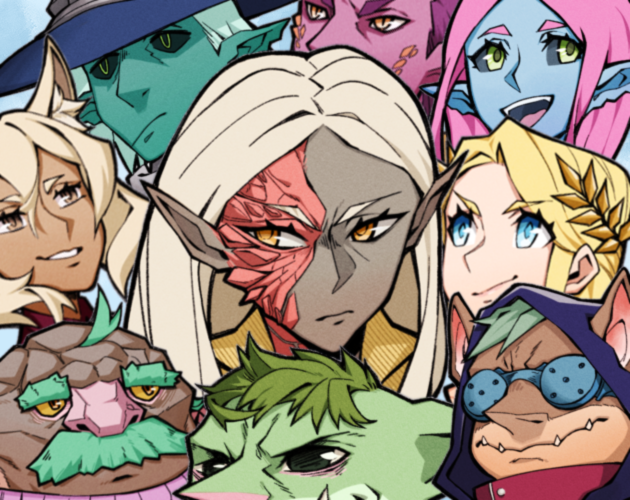

Artist Levil has created an awesome art pack of character portraits for a variety of BREAK!! characters. Check it out here!
One of the best things about owning a lot of tabletop material (adventures, supplements, and otherwise) is that all of it can be resources for whatever you happen to be playing at the moment. While often this involves simply cribbing ideas from different sources, it can also come in the form of porting things from one game to another. This entry is designed to help with that second part, providing some guidelines for converting things from other tabletop RPGs to BREAK!!
As a preface, it's worth saying that the neatest way to do this is to use the original material as inspiration to create brand new things for BREAK!! with the help of the GM's section of the core rulebook. However, there are instances when you are converting things to help save time and effort you would have spent making something entirely new, so meticulously creating stuff wholesale might detract from that purpose.
With that in mind, the guidelines in this entry are meant to help with speedy conversions rather than meticulous ones. There will still be work involved and there could be a lot more said on this, but hopefully these can still help your efforts be smoother than they would have been before.
Monsters, Enemies, Etc
The first step in converting monsters, adversaries, and various entities from other material into BREAK!! is figuring out what the subject's Rank and Menace level would be so you can get its basic stats from the Adversary Table.
Entities from classic fantasy tabletop games have some easy benchmarks. If the system has something like Hit Dice or levels, this can usually be converted into a Rank by comparing the value range for them and adjusting accordingly. For example, if you are working from a game where enemies are leveled somewhere between 1-30, you could probably get away with dividing the level by 2 to figure out what their Rank in BREAK!! would be. A level 10 giant in this example would be Rank 5 and likely Massive to boot!
If there isn't a clear parallel to Rank in the source, or if the math doesn't quite work out, instead look at how strong the entity is relative to the characters in that particular game. For example, if it's a monster that's meant to go up against very powerful characters, it will probably be something that's Rank 11-15.
When choosing which aptitudes are primary and secondary, think about what the entity uses the most. A tough, brawny monster with good senses should likely have Might, Insight and Grit as primary aptitudes, leaving Deftness and Aura as the secondary ones.
If you are going for speed, when assigning something Traits give a +2 to what its most likely used aptitude, and -1 to its weak point. The aforementioned brawny monster might get a +2 Might and -1 Deftness, for example.
Figuring out Menace Level is a little trickier, but ultimately a matter of pinning down the scope of the entity in question.
Of course, there probably isn't going to be a perfect match here - just go with the best fit for your own purposes.
When it comes to monstrous powers and attacks, the fastest way to adapt is to think of existing abilities in BREAK!! and converting said powers to those when possible. Tough creatures with extra Hit Points might gain an Ability like the Gruun's As tough as they look. A monster with a claw attack might make unarmed strikes as if it were wielding a master weapon. A dragon's breath weapon might be similar to the effect of the Heretic's Umbral Draconis ability, and so forth.
Powers and attacks that don't have an equivalent can be altered into ones that fit with BREAK!! - for example, spells that put targets to sleep might instead incur the Fatigued or Dispirited Ailment. Try to consider what the effect is meant for in the source material and run with it.
Attacks or effects that kill instantly or shave away a characters ranks aren't well suited for BREAK!!, so you might consider using things like the Putrefied Status Ailment or Burning/Caustic injuries to keep their danger intact but within the game's scope by giving the characters more a chance to try and counter or deal with it.
Items, traps and other magic effects
Converting these is much like converting Abilities. The quick way is to go with something existing in the game already that's a close match - a ring that allows you to fly might grant you the Sage's Practical Flight ability, a magical trap that shrinks its victims might cause the chibbed status ailment, and so forth.
When possible BREAK!! items should offer some new power or tools to players, rather than increasing bonuses. Simple items items to this effect (your +1 Swords and shields, etc) could simply be made of magical materials and have a custom weapon/shield/armor ability for a similar feel. Items with higher bonuses could grant access to appropriate Calling Abilities instead, a powerful holy sword might mimic the Battle Princess's Luminous Blade, as an example.
Most traps and hazards can be modeled as something to avoid via careful planning or dodge with Checks, with consequences coming from the Impact or Burning Injury table. Certain other traps might be re-worked as causing troublesome or dangerous ailments.
Effects that are more narrative than mechanical, like a mirror that shows one their heart's desire, can usually just be kept as is. This is probably obvious, but it still warrants mentioning.
Maps
Most maps are easy enough to convert into use for BREAK!! - for example, in a traditional dungeon layout the rooms would be Locations in an Adventure Site while the doors and hallways would be access points (though certain ones might also be considered locations if there is something to interact with there). More open places (like a large forest or abandoned town) would be even easier to use.
You might want to cut down particularly large maps into a series of connected Adventure Sites to better suit BREAK!!'s style. Each level of a classic mega-dungeon could be its own site for example. Players can tackle each distinct part in different sessions/adventures that way.
If the map comes with a Random Encounter table already prepared, you might want to alter it to be more inline with how BREAK!! uses them (including "no encounter" results, at least a few non-hostile or potentially non-hostile encounters, etc).
If the map doesn't use Random Encounters already, consider making a new table, or even taking some of the encounters on the map and making them into random rather than guardian style encounters. You could even use some of the encounters from any discarded spots on a map to make a new table if you're reducing the size of a larger site.
The stubborn dead aren't an entirely uncommon phenomenon in Outer World. Death is normally the end and for some folk that simply won't do. Corpses walk and occasionally talk, little spirits flutter about, skeletons get some really big ideas. It might not be the norm, but it's not going to surprise anyone too much when it happens.
However, there are times when someone refuses to pass on in a far more dramatic and dangerous way. They become tethered to a place, becoming a part of it and emerging as a menace to anyone who dare venture into their domain.
This is an entry about Ghosts and the Haunted Sites they reside in.
Ghosts
Ghost is a general term for an undying spirit that haunts a particular place or area. Their presence makes an Adventure Site into a Haunted Site. Normally, a ghost cannot be confronted materially - they do not have a physical form and strike at invaders using a sort of phantom magic (as noted in the Haunted Sites rules) until the interlopers leave or join the ranks of the dead.
There is no one sort of ghost. When creating one, it's important consider the following aspects:
Manifesting Rite
As stated previously, it's normally impossible to deal with a ghost by normal or even magical means. They have no material form, and are instead existing within the mana of the place they haunt. If someone wants to exorcise a ghost, they must perform a task that draws them into the physical world known as a Manifesting Ritual.
Manifesting Rites are not uniform. They might involve returning a sacred item to its proper place, righting some ancient wrong, or proving that whatever the ghost is waiting for is long gone from the world. The only thing they all have in common is that they should all involve traversing the ghost's Haunted Site in some way.
Once the Manifesting Rite is complete, the ghost takes on a physical form. They then either accept their passing and disperse permanently or to attack whoever completed the rite.
Haunted Sites
A Haunted Site is an Adventure Site that a ghost is present in. These sites function normally in regards to the exploration rules (though the ghost's presence could have an effect on the nature of the site or how the inhabitants act) but have the additional consideration of Haunting Effects.
Haunting Effects occur in the following circumstances.
Whenever one of these comes up, you should roll once on the Random Target Table to decide which member of the party is the potential target of the haunting, then roll on the Haunting Effect Table and then play out the effect. In the case of someone doing something that would catch the ghost's attention, you may also simply target them instead of rolling for a random target.
Random Target Table (Re-Roll in the case of tie)
Haunting Effect Table
GM Tip!: A re-skinned Skelemonarch can make for quick and easy stats for a ghost. The shadow beast also works well. That said, it'd probably be more fun to make up your own.
First things first, since the book is shipping and even in some people's hands at this very moment, we're able to announce our very first supplement - START!
Sign up for launch notifications here!
As noted it will include a tutorial/beginner style scenario with lots of ways to take it apart and customize if you're a more experienced GM who wants to give it a spin, as well as a bunch of fun new rules a brand new playable species!
For the main entry though, I wanted to talk about one of the goals I had with BREAK!!'s rules: playing in the moment.
What I mean buy this is that I wanted BREAK!! to draw players into the fiction of the world and reward that investment in it somehow. This pops up in a lot of different ways. One is how many Abilities are framed in a relatively open-ended way. While the result and fiction around these are straightforward, there is a bit of legroom in how they can be used and applied in a variety of situations. I'm a big fan of characters getting a lot of tools in their metaphorical toolbelt, rather than just growing in one specific way, so the hope here is that players pick the Abilities that appeal to them the most and then try to use them as often as possible by approaching situations from a variety of different angles.
Similarly, the risk/reward nature of Stunts is meant to encourage players to go big and flashy, but it also works best when players are paying attention to the small details of the combat they are in.
However, I want to focus on the Contests procedure here, as it's one of the more utilized facets of BREAK!!'s system.
To put things as simply as possible (as I assume most readers of the blog have looked over the rules, and know this already) Contests are used to figure out which individuals come out on top in an exchange that isn't one trying to attack the other. These call for both sides to make a Check, and then has a list of ways to decide who won. This list seems pretty long at first, with several parts to it, but the truth is each of these are often mutually exclusive. If one side passes their check, and the other fails, that first side wins and you don't need to consult it any further. The same goes if both succeed, but one had a special success and the other didn't. Once you've got that in your head, these contests will progress pretty quickly.
What I want to point out is one of the main ways I think players will win contests: having a Bonus on the roll. While some Abilities grant these in specific situations, they are most often given when a player levies one of their Purviews or tries to use the situation at hand to their advantage. In this way, being invested in what's going on will really reward players - while bonuses seem small, they are always significant and just that bit of extra attention can mean the difference between victory or defeat.
These kind of things are why so many aspects of play are framed as a conversation between the group. Not only will the players and GM help each other with concrete things like rules and procedures, but they can also feed each other ideas, remind each other of the little background details that might help, or even make helpful suggestions. This back and forth is one of the places I have the most fun when it comes to tabletop RPGs, so it was naturally something I really wanted to focus on with BREAK!!'s rules. There is always risks here of these conversations stalling out or falling into the same patterns (BREAK!!'s Diminishing Returns rule is one way I tried to prevent that) but ultimately I believe in the fun, friendly people in our hobby enough to trust in it.
The spells and powers wielded by adventurers are but a fraction of the magic on Outer World. Among the arcane arts both mighty and meager there are Jinxes, cousins to the potent hexes wielded by Sages and their ilk. These simple magical maladies are often little more than nuisances, but they can pop up where you least expect them thanks to their relative accessibility.
Jinxes can be inflicted in 1 of 2 ways:
Personal Jinxes
These are targeted affairs, with one person putting a jinx on another. While hardly the most dependable things (and often, costly whether they work or not) they are popular among petty rivals, irritated magical university students, and eccentric sorts who want to teach someone a lesson.
Contingent Jinxes
Some jinxes are connected to a circumstance rather than targeted ill-intent. The magic involved for these lingers and ends up being a bit more potent than personal jinxes.
If inflicted with a Random Jinx...
The Jinxes themselves...
A mechanical note: Jinxes are mostly just Quirks without the benefit. The two kinds of Jinxes presented here match up with Physiology and Spirit Quirks respectively (with a few changes to keep things fair) so it should be easy to make new ones: either take the negative values from other kinds of Quirks and make up fiction for them, or use them as guidelines to make entirely original Jinxes!
Spirit Jinxes
Physical Jinxes
Getting rid of a Jinx
Those suffering from a jinx are unsurprisingly eager to get rid of it. Fortunately, the magic behind them can be unraveled readily.
Using Jinxes in your game
Jinxes make for a fun, low stakes peril as they tend to be short lived and more annoying and troublesome than fatal. These are best attached to another adventure or encounter to complicate them a bit. For example, a mange hexer might use them on a party that has been clashing with their bandit gang as of late to try and get an upper hand, or a strange town the party might need gather information or supplies from might have a lot of eccentric customs they need to follow lest they be jinxed. You may also add other sources of Jinxes, like monsters that inflict them on those they attack, or a uniquely cursed item.
In addition, they make for a fun option for mischievous players, if not a particularly dependable one. Heretics are often especially fond of jinxes as they are already quite good at figuring out what would annoy or upset someone.
While it's possible to play BREAK!! combats entirely within the theater of the mind, I highly recommend you use some sort of physical (or digital, if your games are played online) map while doing so. Having a map to reference helps everyone at the table re-focus if something else catches their attention and can help prompt them to come up with things like stunts, tricks, or other stratagems.
This is especially true for important Guardian Encounters! While you can use the standard battlefield map for most smaller scale encounters, having a special map for big fights can really add a lot.
Don't fret though! Drawing one is actually much easier to do than it might seem. While the rulebook has some really gorgeous looking examples thanks to Grey's spectacular art, you can honestly get away with much simpler ones that just about anyone can make.
A good way to think of it is that BREAK!! maps, whether it be Region Maps, Adventure Sites, or Battlefields, are all about nodes.
Here's a quick mock-up to show what I mean. I made this in a few minutes in MS Paint, but in my home game I'd likely have doodled it on some index cards or on a dry-wash mat:

This battlefield is intended for a sort of ambush in a cave. There is likely a large, intimidating guardian on the path or near the exit, while some spell casters or foes with missile attacks are perched on the ledges, ready to rain whatever dangerous annoyances they have down on the party.
The important spots on the battlefield are clearly labeled and any conditions that apply to them listed as well. The lines connecting the points make it clear how players are able to move, and some notes at the top add any considerations that apply to the entire thing. All you need are some minis or tokens or other things to mark where everyone is and you're ready to go. The party has a lot of choices here to - do they try to climb to the ledges? Barrel through the main threat? Turn around and get the heck out of dodge?
And that's really all there is to it. Like all things with GM Prep, try not to stress too much and have fun!
Some Farewell Tips:
Thanks for bearing with the marketing blitz everyone - from here on out, the blog will return to it's normal gameable self. But, before we go-
Author Reynaldo plays Radia Senki and talks about the game's influences!


Part one of the video answering all the questions we recieved!
I apologize for the flipped logo at the beginning. It's a casualty of salvaging footage that had ended up upside down. 😅
I recently did a live stream highlighting character creation, and it's now available on youtube to watch at your leisure.
Just another "we're still at it" update - Grey and I are going full speed ahead. Some more proofreading is done and now we are looking at through edits, final touch ups, and maybe some final organizational additions.

We're finalizing the Game Master's section and poor Lord Vertex got cut, so I'll show him off here. Don't worry, he'll come back in something later.
 |
Another "We're still at it!" post - I'm currently reviewing/revising the text and layout for the setting section and you know, I think it's looking pretty good:


The Unshaped are a dangerous threat, primordial beings with no defined body, they instead manifest as clusters of ideas that can take on a variety of forms at will. Their disregard for anything but their own personal goals and amusements make them very hard to reason with, to boot!


Monsters and baddies are some of my favorite things to come up with when writing for BREAK!! or anything, really. Thinking about how they confront the players or affect the setting itself is always fun to dream up, even if detailing it can get finicky or tedious at times. I just finished an Unshaped themed around insects and even though it's hard to know what that means outside the context of the rules, trust me when I say that I tried very hard to make it interesting and fun.
That said, I always end up thinking a lot about the assumed adversaries that seem to come hand in hand with adventure themed role-playing. For a lot of reasons I dislike when players can see a particular creature and just assume they can attack it without thought or guilt, so with the exception with a few true monsters, living spells, or what have you I do my best to avoid it.
Last entry I mentioned Adversaries and Allies, but I think really, in BREAK!! almost anything written in can be used as either, depending on the circumstances.

If an entity shows up in a BREAK!! book and isn't meant to be an easy to use archetype or single example of a much larger population or creature, expect it to have some kind of silly, sappy or maudlin nonsense on the why's and how's of its existence in the Outer World, and a way for them to end up on either side of the player's activities. Heck, it often shows up in those former examples as well!
Excluding that Unshaped I just wrote. He's just kind of a jerk.
While there isn't much to report (we're still at it folks!) I can share some art Grey has done for two of the game's Game Master Entities; The Chosen One and the War Gruun!
Chosen Ones are individuals that have been chosen by Fate to undertake some great challenge or quest, usually claiming powerful treasures in the process. The issue here is that Fate has been twisted and bent thanks to various events in the Outer World's history, and Chosen One's quests have become mistimed or misapplied in the meantime! As a result, they can be anything from unlikely allies to dangerous enemies of the player characers!

War Gruun were created in the 2nd Aeon by the Bio-Sorcerers of Calian, meant to be unstoppable weapons employed against a massive number of ordinary soldiers. While they retain a certain gentleness that is common in all Gruun, they were made to fly into an unstoppable rage during certain conditions, whether they like it or not.

A big hope with these - and many of the Game Master controlled entities included with BREAK!! is that there isn't a simple way to to deal with them. They aren't automatically your allies or adversaries; but they can be either.


